




 Knowledge centre ITW Spraytec Expert
What is anti-seize?
1. What is an anti-seize agent? Anti-seize products are applied to bolts, fasteners, flanges, and other tight interfaces to prevent seizing and corrosion, as well as providing lubrication to facilitate disassembly. Anti-seize agents can be pastes, greases, and coatings, and they...
- Share
-

-

-

-

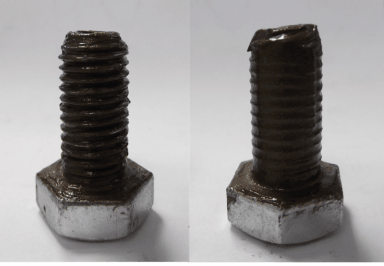
1. What is an anti-seize agent?
Anti-seize products are applied to bolts, fasteners, flanges, and other tight interfaces to prevent seizing and corrosion, as well as providing lubrication to facilitate disassembly. Anti-seize agents can be pastes, greases, and coatings, and they can be based on a wide range of materials (e.g., copper or nickel) suited to particular systems. Therefore, selecting the right anti-seize product for the system is crucial. A selection guide is available.
2. Why use Anti-Seize?
A properly chosen and applied anti-seize agent can generate numerous benefits for an engineering system. Anti-seize agents can: * prevent pick-up and seizing of fasteners during assembly
- to produce a more precise and consistent clamping force in the fasteners
- separate and lubricate the surfaces of one of the articulated interfaces during operation, which reduces wear and loosening
- reduce interface corrosion by preventing water infiltration and chemical attack
- Ease of disassembly and prevention of damage to components during disassembly.
Some anti-seize products are designed for dynamic systems.
They can: - assist in the assembly of tight fits
- reduce friction between components in vibrating systems
- to reduce friction and wear on surfaces connected by relative movement, for example splines, couplings
3. Where should Anti-Seize be applied?
If necessary, a thin layer of anti-seize compound should be applied to each interface of an assembly. This should ensure optimal protection of the system’s interfaces. When anti-seize compound is used on a fastening assembly, it should be applied to the following surfaces:
- The thread of the bolt or stud
- Smooth, unthreaded sections of the bolt or stud if they are located inside the assembly
- The underside of the bolt head
- The surface of the nut
- All parts of the washer, if applicable. A thin layer is sufficient – any excess will be squeezed out during tightening.
4. How much anti-seize compound should be applied to a surface?
A thin layer is sufficient. For a typical fastener assembly, a film approximately 0.1 mm thick is suitable.
Some recommendations suggest completely filling the threads of a bolt with anti-seize compound. However, since excess anti-seize compound is removed by tightening, this amount is excessive and often unnecessary. A thin layer is recommended. With an aerosol anti-seize compound, the instructions in the technical data sheet explain the best way to achieve a thin layer with uniform coverage.
However, the specific conditions of each system must be taken into account. The ROCOL technical team can advise you on this.
5. What is the best method for applying anti-seize compound to a surface?
Before application, ensure surfaces are clean and free of oil, grease, or contamination, especially if the components are supplied pre-oiled.
For applying a thin coat of anti-seize compound, a brush is generally the most effective tool. Using a brush will produce a more even coat than using a gloved hand or finger, particularly on wires.
A brush should be used for only one material. If a brush has been used to apply a particular anti-seize compound, it should not be used to apply another, even if it has been cleaned. Cross-contamination can affect performance.
For an aerosol, following the instructions on the can and the technical data sheet should produce an even coat of anti-seize compound on component surfaces.
6. How to prepare a surface before applying anti-seize treatment?
For best results, surfaces should be clean, dry, and free of oil, grease, or contamination. This can be achieved using a residue-free industrial cleaner such as ROCOL Rapid Dry Industrial Cleaner
. Many nuts and bolts are supplied pre-oiled to prevent corrosion during storage. It is recommended to remove the oil before applying an anti-seize compound to avoid affecting the anti-seize compound’s friction properties (and therefore bolt tension) or corrosion resistance.
7. Should the anti-seize be applied again?
The anti-seize compound is unlike bearing grease or transmission oil in that it does not require periodic replacement. Once applied, it is designed to last for the service life of the interface. However, if a fastener is removed or an interface is separated, it is recommended to clean the components and reapply the anti-seize compound.
If fasteners are retightened or reused, care should be taken when selecting the torque; for more information, click here. Because fastener surfaces change as they deform under load, the coefficient of friction may not be the same the second time a bolt is used—which could affect the final tension.
8. How should an anti-seize compound be removed from a surface?
For cleaning an anti-seize compound from a component, a standard industrial degreaser (e.g., ROCOL Heavy Duty Cleaner or Stripper and Degreaser Spray) or a solvent cleaner (e.g., ROCOL Fast Dry Industrial Cleaner or Electra Clean) should be suitable. A brush or cloth should suffice for the cleaning process – abrasives are not recommended as they will damage the component surfaces. It is important to leave the surface in a suitable condition for the next stage of its life.
- If a clean surface is then required, use a residue-free cleaner such as ROCOL Rapid Dry Industrial Cleaner or Electra Clean.
- If the component is to be stored, a corrosion inhibitor may be required to protect the surface, for example ROCOL Moisture Guard, Z30 or FOODLUBE Protect.