




 Knowledge centre ITW Spraytec Expert
The right choice for the food industry
Not all food-grade products are created equal.
- Share
-

-

-

-

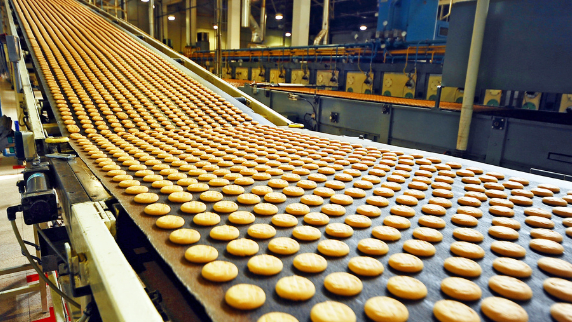
By emphasizing cleanliness and hygiene at production sites, it is now common practice in most food and beverage industries to use food-grade lubricants for maintenance operations to reduce the potential risk of contamination. This provides manufacturers with complete traceability, ensures compliance during audits, and guarantees traceability to protect their company or brand reputation.
First step: obtain NSF registration
NSF is a global, independent organization that develops public health and safety standards by providing certification and testing services.
Lubricants whose formulation is registered with NSF can be considered suitable for the use category for which they are registered. All NSF- registered lubricants must display the NSF logo , the corresponding category code(s) for which they are registered, and the NSF registration number .
Some NSF categories confirm that registered lubricants are safe for incidental food contact. There are concentration limits that define “incidental” contact for different materials, and it is up to HACCP programs to determine whether contact is incidental within the limits set by regulations.
Second step: choosing the right lubricant for the job
Different machines and production environments have different maintenance requirements, and it’s not as simple as selecting an NSF- registered product and assuming it will be suitable for use in your plant.
The NSF offers a range of usage categories for maintenance products. It’s important to understand what the different NSF category codes mean , and where and how different food-grade products can be used in food and beverage production facilities.
Here’s an overview:
NSF H1 : A lubricant labeled H1 can be used in food processing areas where accidental contact with food is acceptable. A common misconception in the food industry is that an NSF H1 lubricant guarantees the safety and integrity of food products, whereas in fact, H1 lubricants are only safe in the event of accidental food contact. HACCP programs must determine whether the contact is accidental.
NSF H2 : Indicates lubricants that can be used in a food processing area provided that there can be no contact with food. This category is not food-safe.
NSF 3H : Release agents that can be used in contact with food within the limits set by applicable regulations, e.g., FDA 21 CFR 172:878 for white oils.
NSF HT1 : A product labeled HT1 indicates a heat transfer oil that can be used in environments where accidental food contact may occur.
NSF K1 : Indicates cleaning and/or degreasing solvents. This category is not suitable for use in processing areas.
NSF K2 : Designates solvents used to clean instruments and electronic equipment. This category is suitable for use in processing areas.
NSF K3 : Used for adhesives or glue removers. Products in this category can be used in processing areas if washed with detergent and rinsed.
NSF A1 : Groups cleaning products. Products in this category can be used in and around processing areas if they are subsequently rinsed.
NSF A7 : This classification designates metal polishing products suitable for use on surfaces not in contact with food in and around food processing areas.
NSF C1 : This category indicates products that can be used in the processing of inedible products, non-processing areas, and/or outdoor areas of food production facilities.
The term “food grade” is widely used, but it’s important to recognize the specific requirements of each operational and maintenance process in your food or beverage processing facility. If you’re unsure which products are best suited to your needs, contact a member of the ROCOL team who can guide you.