




 Knowledge centre ITW Spraytec Expert
Anti-seizing and anti-corrosion protection?
Does Anti Seize cause corrosion? It is often said in industry that copper-based anti-seize compounds can cause galvanic (bimetallic) corrosion in some systems, particularly with stainless steel or galvanized fasteners. However, this does not occur in the vast majority of stainless...
- Share
-

-

-

-

Does Anti Seize cause corrosion?
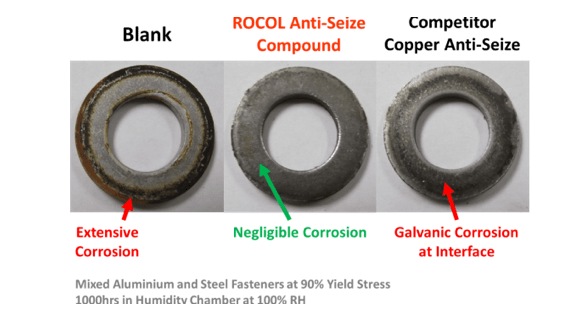
It is often said in industry that copper-based anti-seize compounds can cause galvanic (bimetallic) corrosion in some systems, particularly with stainless steel or galvanized fasteners. However, this does not occur in the vast majority of stainless steel or galvanized steel systems.
In the rare systems where this occurs, it is often caused by a poor-quality anti-seize compound that dries out, evaporates, or is washed away. This can leave bare copper and bare steel/zinc in the presence of water.
ROCOL anti-seize compound
This compound provides excellent corrosion prevention, even when placed between different metals, because it exhibits high resistance to drying, washing, and evaporation:
If a risk of bimetallic corrosion is likely in a given system, ROCOL suggests the use of Anti Seize Stainless, which does not contain metal powders, or Anti Seize 797 (Nuclear Grade), a copper replacement solution containing nickel.
ROCOL is able to provide advice on the correct anti-seize agent to use.