




 Knowledge centre ITW Spraytec Expert
Anti-Seize – The best compromise for me
Anti-seize compounds are designed to prevent bolts and fasteners from loosening due to vibration.
- Share
-

-

-

-

1. Which is best for systems with significant vibration?
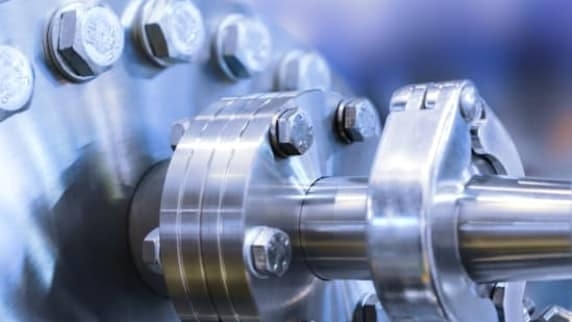
Anti-seize compounds are designed to prevent bolts and fasteners from loosening due to vibration. These are static systems. Therefore, they must be able to withstand a small amount of relative movement themselves. They must also prevent wear so that vibrations do not cause widening and loosening of component interfaces. Some ROCOL products that perform particularly well in this type of system are listed in the table below.
Other systems have greater interfacial movement that must be allowed but controlled (e.g., splines, keyways, couplings). These are dynamic systems. The table below lists some ROCOL products that perform particularly well in this type of system.
The type of wear that occurs under vibration in static and dynamic systems is called fretting. ROCOL anti-seize compounds for static and dynamic systems are designed to reduce fretting.
Optimized for… static systems, such as bolts, fasteners, flanges and joints
- Anti-seize compound
- Anti-Seize 797
- Stainless steel anti-seize
- Anti-seize spray
- FOODLUBE Anti-Seize
- FOODLUBE Multi-Paste
… Dynamic systems, such as interference, splines, couplings, vibrations
- Dry Moly Paste
- MTLM
- Oxylube
- Dry Moly Fluid / Dry Moly Spray
2. What is the best solution for tight-fitting, pressure-fit, and interference-fit components?
When mounting components with a tight fit, it is important to reduce the risk of damage during assembly: this improves assembly accuracy, reduces the energy required for assembly, reduces wear in service and facilitates disassembly.
ROCOL MTLM , Dry Moly Paste, Dry Moly Spray, Moly Dry Fluid, and Oxylube are designed to optimize assembly and reduce wear during operation and facilitate disassembly. FOODLUBE Multi-Paste and FOODLUBE Anti-Seize are suitable for food processing systems where accidental food contact may occur ( NSF H1).
ROCOL can provide guidance on what is most appropriate for the particular system required.
3. Does a higher maximum operating temperature indicate a better product?
The upper operating temperature is generally defined by the melting/oxidation/decomposition temperature of the single ingredient at its highest temperature, for example -1100°C for copper. However, anti-seize compounds may contain multiple ingredients that lose their effectiveness at different temperatures, for example graphite at 600°C and MoS2 at 450°C.
The selection and performance at the operating temperature of the system in which it will be used are therefore the key factors to consider when selecting anti-seize compounds. Choosing anti-seize compounds based on maximum operating temperatures of 1200°C versus 1000°C is unlikely to guarantee improved performance at 200°C. At 200°C, high-quality grease thickeners and base oils will still be present, as both have a significant influence on performance.
ROCOL can provide guidance on the expected composition of anti-seize compounds at different operating temperatures.